



 Facebook
 X
X LinkdIn
 Copy Link
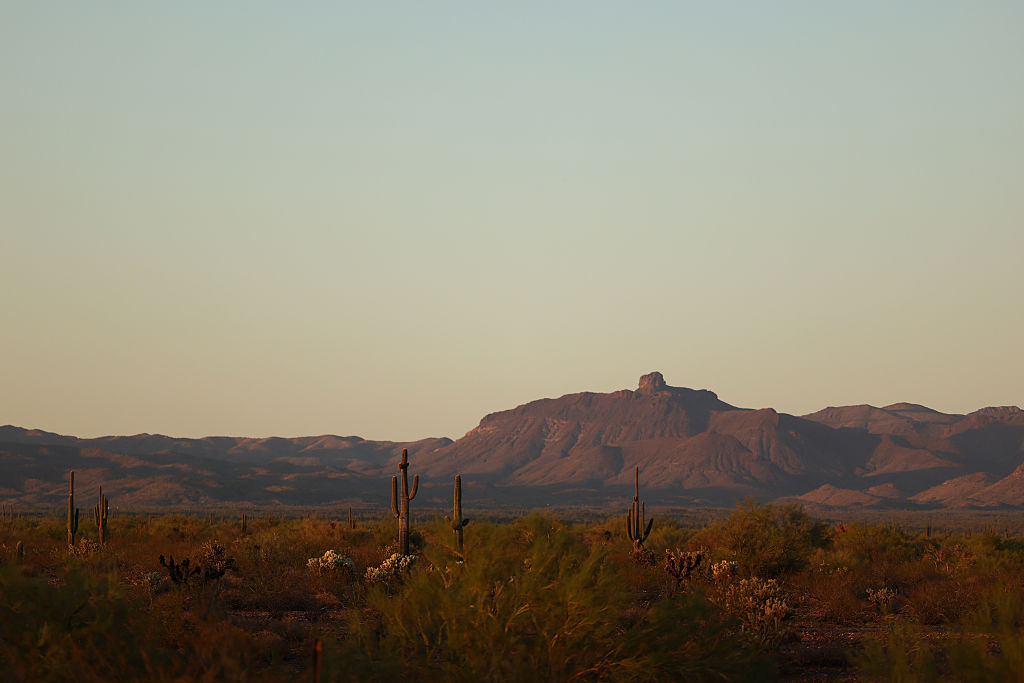
The epigraph to this novel is from Chretien de Troyes’s Lancelot, one of the French author’s Arthurian romances. It is fitting because The Last Westerner is a medieval romance, as well as an epic set in the American Southwest in the closing years of the 20th century. The dedication is to the author’s wife and to the late Edward Abbey, a personal friend. It is equally fitting because The Last Westerner is a western novel in setting and theme and will bring to mind other western novels such as Abbey’s The Brave Cowboy (1956) and Cormac McCarthy’s All the Pretty Horses (1992). Abbey’s book is subtitled, An Old Tale in a New Time. That could be the subtitle for The Last Westerner too, and as for pretty horses, Chilton Williamson, Jr.’s novel is full of them. For this is a story about the search for a beautiful horse, a Peruvian Paso named Cortez. And as far as the Western landscape it is here too in all its awful grandeur, evoked beautifully by riveting descriptive prose like that found in McCarthy.
The story begins at the Bar Nun Ranch in southeastern Utah, owned by Jody James. The prized show horse is hers, and when it’s stolen, thus initiating the action of the novel, her lover Jeb Ryder vows to recover it for her. Ryder is a retired range detective in his early 50s, and what follows is a story that turns into an epic quest on horseback through the canyons and desert mountains of western New Mexico and eastern Arizona, a journey that finally ends in Mexico. The horse changes hands many times, and once is running with a herd of wild horses. Early on, Ryder acquires a helper, a 16-year-old Navajo kid named John-Wayne Bilagody, who was one of the thieves. He wants the horse too, for his girlfriend. Williamson means us to think of Don Quixote’s loyal retainer Sancho. It is not the only reference or evocation of that greatest of novels. For Ryder, like the famous Don, is trying to live according to values of an older more honorable time. Like him, he sometimes looks ridiculous, as when in a fever-induced delirium he charges the radio telescopes at the National Radio Astronomy Observatory west of Socorro, New Mexico. Ryder is the last westerner, then, in two distinct senses. He is a holdover from the Old American West of history and folklore, and he is a western knight-errant in a postmodern America.
While Ryder is convalescing at the Quantrill ranch in Catron County, New Mexico, John-Wayne takes over the narration. Ryder has gotten himself into trouble with the law, but the ranch owner, Jack Quantrill, is a local lawyer who knows how to deal with a judge. Quantrill brings to this reviewer’s mind Gavin Stevens, the gentleman lawyer from William Faulkner’s novel Intruder in the Dust. Like Stevens, Quantrill is a regional patriot and lover of books, rooted in the land and loyal to the values of another time.
Ryder has a female counterpart also, Carmen Dominguin, a beautiful woman of Spanish and English ancestry, who is the leader of an armed band of Mexican insurgents who have crossed the border into the United States to escape pursuing government forces. Now they have Cortez, whom Carmen names Juarez (after the famous Mexican revolutionary). She promises to return the horse, but not until the brigada gets back to Mexico. So Ryder and John-Wayne must ride with them south through the remnant of what Williamson calls “the ancient American wilderness.” It is still there, even today, crisscrossed by highways of course, which the brigada crosses at night to avoid detection. The greatest danger to the two Americans is the second-in-command, Humberto, who wants to kill them to simplify things, and to eliminate a rival (he is in love with Carmen also); but they are protected by Carmen, who lives and commands by a code of honor very similar to Ryder’s.
Williamson has a fine eye for detail, and his prose captures, or recreates, the subtle changes in climate (fall is approaching), as well as the changes in light and temperature from early morning to twilight, and from day to day as the nights grow colder and the light becomes more angular. Nor does he neglect describing the physical work of making camp, finding water, shooting game, bedding down.
The last section takes place in the State of Sonora in Northern Mexico. The ordeal is over, but the story is not, nor the romance. Ryder claims Cortez (or Tortuga, as he has nicknamed him), but pays John-Wayne for his help, plenty for him to buy his own girlfriend a horse. Ryder and Carmen spent several weeks in the charming colonial-era city of Hermosillo, and then journey to the Sea of Cortez. At Bahia Kino, a fisherman offers to take them to visit an island. They are nearly trapped by a storm, but escape. Ryder, being a man of his word, returns with the horse to Jody and her splendid Utah ranch. But he finds that things have changed. Jody is not exactly overjoyed to see Ryder, or the horse (it’s three months of living in the wild have ruined it for showing). And so Ryder is a free man again, free to return to Mexico and Carmen. Searching for months for a prized possession, he has found what is infinitely more important. For Ryder, the son of chivalry, “women are the whole world, and the promise of it.”









Leave a Reply