


 Facebook
 X
X LinkdIn
 Copy Link
Clandestine US military forces are not the only foreign military troops operating in Venezuela. Russia has quietly dispatched military advisors of its own to the country, moved to reinforce Venezuela’s air defenses and signaled readiness to deepen military cooperation.
While Donald Trump has authorized the CIA to conduct covert ops on Venezuelan soil and just days ago approved the seizure by US troops of an oil tanker leaving Venezuela, Vladimir Putin has pledged his support for Nicolás Maduro.
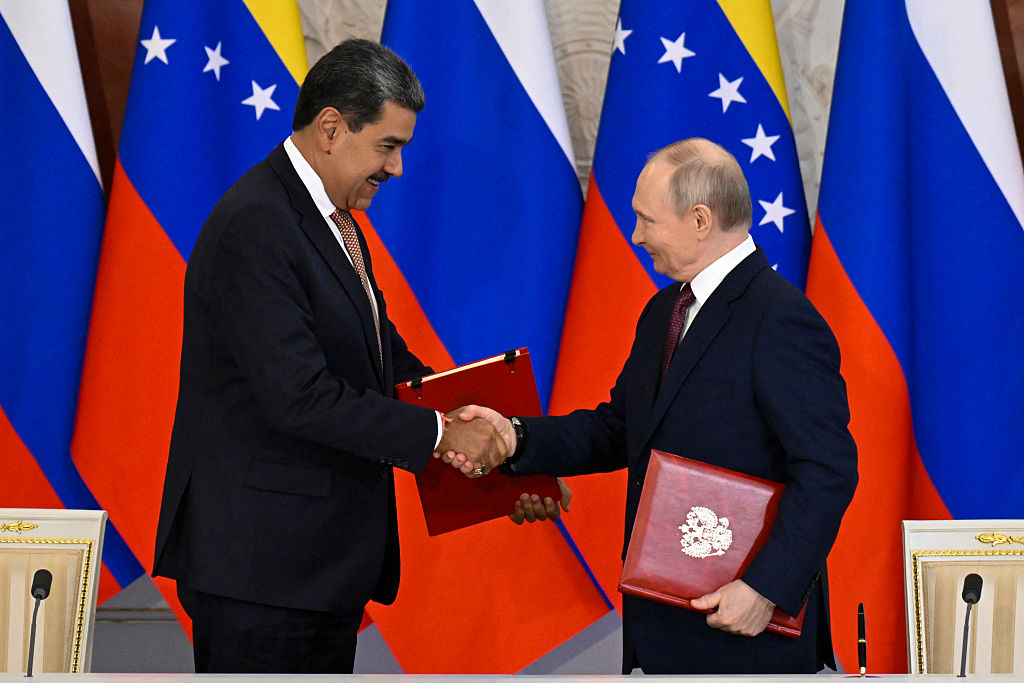
In a phone call with Maduro on Thursday after the tanker was captured, the Russian president “expressed solidarity with the Venezuelan people.” Putin also “confirmed his support for the Maduro government’s policy aimed at protecting national interests and sovereignty in the face of growing external pressure.” Maduro earlier this year visited Moscow and attended a military parade and signed a partnership agreement with Putin.
The close military ties between the two countries are clear with Russian soldiers appearing in Venezuelan parades and the Venezuelan military circulating posters of its men armed with Russian weapons. But the force Russia has dispatched on the ground is too small to be meaningful in a conflict. What, then, is Russia’s end goal?
Russia’s military cooperation with Venezuela matured into a strategic partnership during the Chávez-Putin years, when Caracas became one of Moscow’s biggest arms customers. Venezuela’s military is built almost entirely on old Russian equipment that dates back to the Soviet era – it includes Russian fighter jets, tanks, missile systems and armored vehicles. At the center are Russian-made air-defense systems. These range from long-range S-300 missile batteries to medium-range Buk and Pechora systems and portable Igla launchers. The country’s equipment also includes Su-30 fighter jets that Venezuela recently displayed carrying anti-ship missiles. A few aging US F-16s from the pre-Chávez period still fly, but they are no longer a significant part of the force. Altogether, Venezuela’s armed forces number a little over 120,000 personnel. “It’s estimated that the regime invested at least $12 billion in arms and military equipment from Russian, “says David Smolansky, a senior security and foreign-affairs advisir to María Corina Machado, Venezuela’s opposition leader.
While Putin may wish to project power, Russia’s war in Ukraine has reduced the Kremlin’s ability to intervene meaningfully in Venezuela. “Before Putin can help anybody, he needs peace with Ukraine. It’s unclear what he thinks he can do militarily, maybe a little bit of Wagner group sabotage, but it’s fairly small fry,” Vanessa Neumann, a Venezuelan-American diplomat, said.
The limits of Russian power should be no mystery to Maduro. Just last year in Syria, a country where the Kremlin spent years propping up Bashar al-Assad militarily, diplomatically and on the ground, Moscow was nowhere to be found when rebel forces finally closed in. Assad fled to Moscow, his government collapsed and he joined the growing roster of Russian-backed strongmen now shivering in exile after fleeing far warmer climates.
As American B-52 bombers and warships circle Venezuelan shores, Washington insists its goal is to take out drug-routes, not the regime. Drugs are an important source of income for Maduro and his circle. Opposition groups claim the regime got more than $8 billion from drug trafficking last year. But the amassed American military appears poised for an invasion, clouding the distinction between taking out drug routes and taking out the regime. “The worst possible outcome is to amass this force, then have them sort of melt away, and having accomplished nothing on the ground,” warns Douglas Farah, president of national security consulting firm, IBI Consultants and long time latin America observer.
It’s not the first time that the Trump administration has put focus on Venezuela. In 2019, the United States threw its support behind opposition leader Juan Guaidó, recognizing him as interim president. For a while, Guaidó mobilized mass protests and enjoyed broad diplomatic recognition. But the military never moved, soon the opposition fractured, and momentum faded. When the Biden administration took office, it paid little attention to Caracas, and the interim government slowly withered away, allowing Maduro to declare victory.
This time around, the US campaign raises the same question. What is the goal?
“You can shoot all the little boats you want out of the water, and it’s not going to make any strategic difference,” says Farah. Washington has positioned itself between choices without fully committing to any of them. A full-scale intervention is unrealistic, limited strikes risk looking symbolic and financial pressure remains only partial. The result, Farah says, is ni quita ni limonada – neither fish nor fowl. “If strategy remains undefined and pressure fades away, then the regime wins. And that’s a bad option. Maduro will say he defeated the United States.”
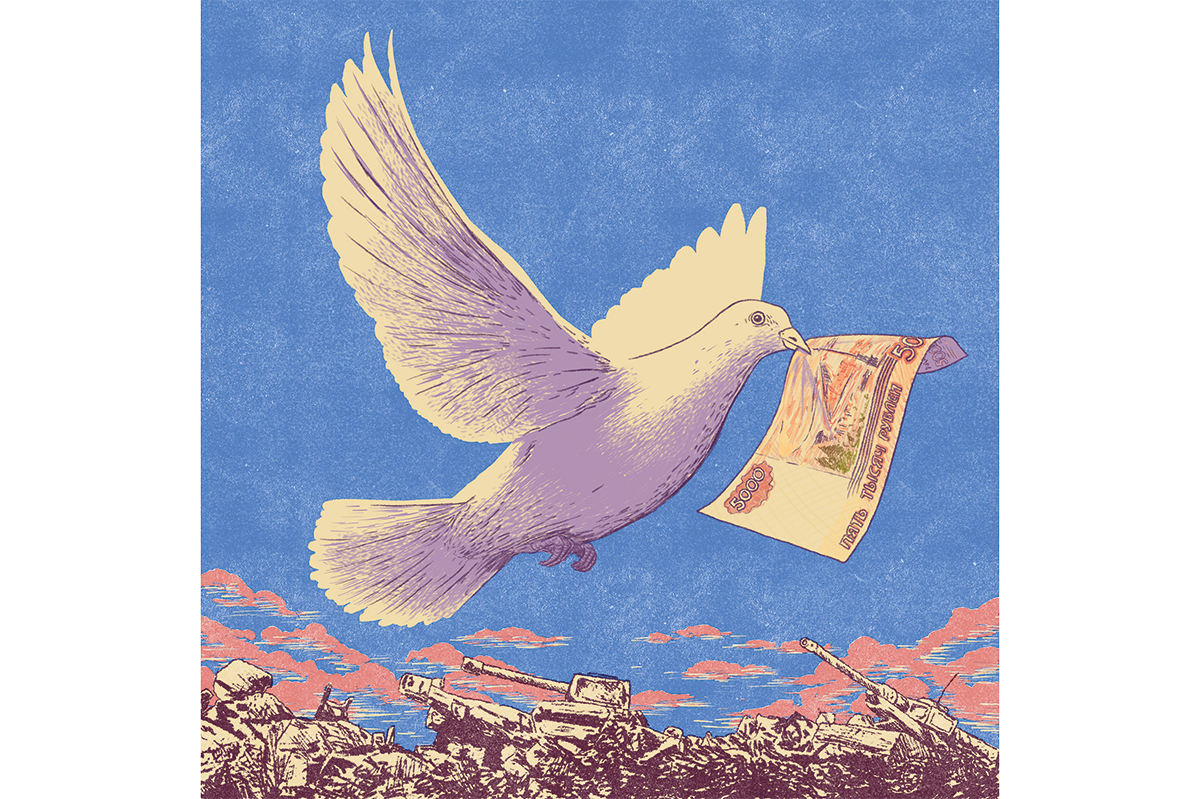
That is precisely what Moscow hopes for. Russia cannot rescue Maduro militarily, but it may not have to. If the US campaign withers away without an outcome, the Kremlin can score a victory and claim, once again, that even a war-drained Russia can outwait American attention span.








Leave a Reply