 Facebook
 X
X LinkdIn
 Copy Link
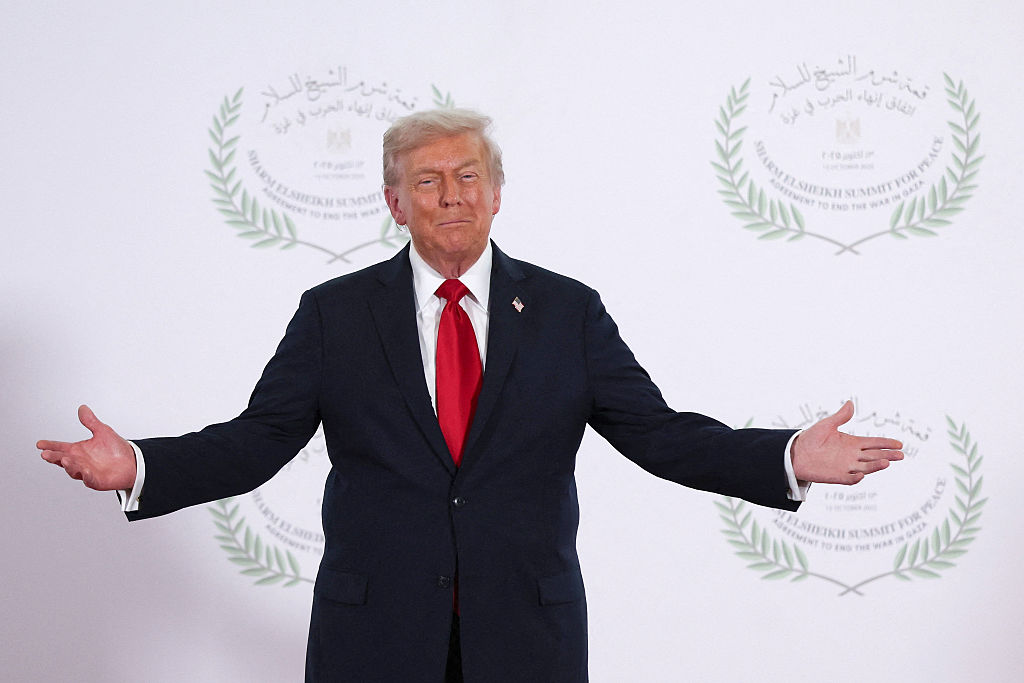
Donald Trump has begun the process of banning the Muslim Brotherhood. The President asked his officials last week to investigate whether certain chapters of the group should be classed as foreign terrorist organizations, which would result in economic and travel sanctions.
Some are portraying this as a reckless lurch into Islamophobia. In fact, it is overdue by at least a decade. The Muslim Brotherhood is not a benign religious association. It is a disciplined ideological movement with a century-long record of exploiting political systems. Its explicit objective is to work towards the establishment of a global caliphate – only by gradualist means, rather than the reckless confrontation and brutality favored by its distant offshoot, ISIS.
Its approach varies by setting, not by moral principle. Where the environment is permissive – in fractured states, or in countries with weak institutions or sympathetic governments – it behaves like a revolutionary vanguard. Where the environment is rules-bound and resistant, it burrows into student groups, charities, interfaith organizations, academic centers and even government institutions, steadily strengthening its influence. But wherever it operates it has the same ultimate aim.
The Brotherhood’s modus operandi has been understood by intelligence services for years. Trump’s move is less a policy innovation than an admission of reality.
There are several reasons why Trump is acting now. One is legislative: the “Muslim Brotherhood Terrorist Designation Act of 2025” was introduced in Congress in July, championed in the House by Representative Mario Díaz-Balart and in the Senate by Ted Cruz. The Act’s progress created a political incentive for Trump to get ahead of Congress and demonstrate leadership on the issue. The MuslimBrotherhood has piqued Republican anxieties about national security for two years now, ever since Hamas’s attack on Israel unleashed near-constant Islamist-flavored protests on American streets and campuses.
The battle against progressive academia, where such protests have often turned outright anti-Semitic, has become a mainstay of Trump’s political platforms. Pro-Hamas encampments, faculty statements whitewashing Hamas’s atrocities, and the open collaboration between progressive student groups and Islamist-aligned organizations shocked even those who thought they had become accustomed to the intellectual decay of American academia.
For Republicans, the protests confirmed what they have long suspected: that American universities have been significantly penetrated by an unholy alliance of the progressive left and Islamist networks, each using the other’s grievances for its own ends.
For decades, university administrators, civil-rights bureaucracies and even parts of the intelligence community have tiptoed around clear signs of Islamist organizing on campus. They have convinced themselves that confronting Islamist activism would lend credence to the narrative of a persecuted minority and so make radicalization worse.
In fact, the opposite happened: the vacuum left by institutions gave ample room for Brotherhood-affiliated groups to pose as authentic voices of Muslim America, even when their aims bore little resemblance to the concerns of ordinary Muslims. This appeasement occurred in many other civic spaces besides academia.
Targeting the Brotherhood abroad allows Republicans to confront it where it is vulnerable. The Executive Order sensibly says that three foreign branches of the Brotherhood – in Egypt, Jordan and Lebanon – should be investigated, with reports due on them in mid-December and decisions to be made on their fate by the end of January.
This approach gives the new policy a good chance of success. Investigators can now follow financial and organizational trails they previously might have considered too politically sensitive to pursue. Brotherhood-linked institutions will be subjected to a level of scrutiny they have long avoided. Intelligence agencies have long claimed they are too busy to address “non-violent Islamism,” even when states like Egypt and the UAE have provided information about the Brotherhood’s malign activity. Trump’s Executive Order puts a stop to that “not my department” approach. It will be fascinating to see what kind of terrorist activity this sudden beam of light will reveal.
The one point Trump appears not to have fully considered is the contradiction between this ban and his warm relations with Qatar and Turkey, the two most prominent state sponsors of the Muslim Brotherhood. The two countries were left off the proscription list. Doha bankrolls Brotherhood-aligned groups across the region and hosts the Hamas leadership; Ankara sees the Brotherhood as a natural extension of its regional ambitions.
It may be Trump’s view that some contradictions are simply the cost of doing business in the Middle East. If the ban is to have lasting credibility, however, Washington will have to square its antipathy to the Brotherhood with a foreign policy that still treats key Brotherhood sponsors as indispensable partners. Laura Loomer, the influential but controversial right-wing commentator, has already complained loudly about Qatar and Turkey being left out of the scope of the Executive Order.
Loomer is impatient for these countries to be held to account. But of course intelligence about the activities of Egyptian, Jordanian and Lebanese Islamists will rapidly implicate Qatar and Turkey as the Brotherhood’s key international sponsors. Likewise, accumulating information about foreign infiltration of the US education sector will yield damning information about hostile Qatari activity that Trump will find it difficult to ignore.
The significance of this goes beyond American borders. Other Western democracies have also spent years tying themselves in knots over how to approach the Brotherhood.
European governments, in particular, have long worried that their cautious approach to Islamist activism has created precisely the conditions that the Brotherhood exploits best: permissive legal frameworks, weak enforcement, and a political class anxious to avoid accusations of prejudice. Trump’s designation should embolden them to follow the example of Austria, the one European country that has proscribed the Brotherhood as a terrorist organization. The Austrian ban has not caused community relations to collapse. Many Muslims hate the Brotherhood as false representatives of their views and interests, and bullies bent on suppressing their freedom.
For all the unanswered questions around Trump’s decision, its core logic is sound. The Muslim Brotherhood has thrived on western hesitation, on the belief that ambiguity is safer than clarity. The Brotherhood’s furious online response to last week’s policy shift shows how much it values that hesitation and wants to encourage it. The Executive Order is a belated correction. Whether it is the beginning of a sustained shift, or simply another false dawn of resolution in the face of Islamist infiltration, subversion and intimidation, will depend on what Washington and its allies choose to do next.