



 Facebook
 X
X LinkdIn
 Copy Link
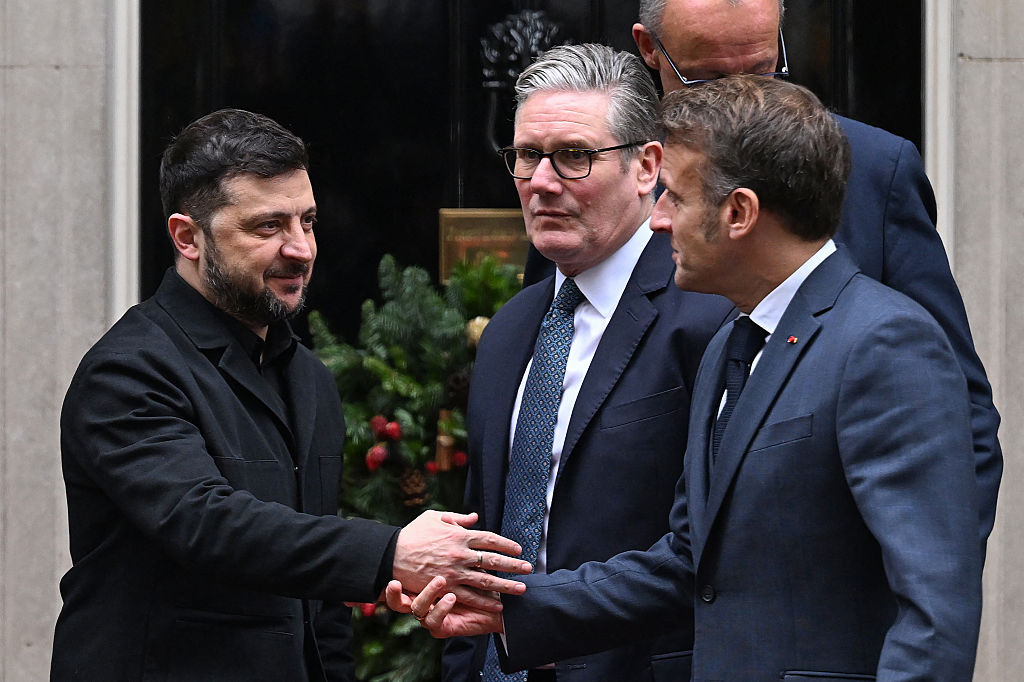
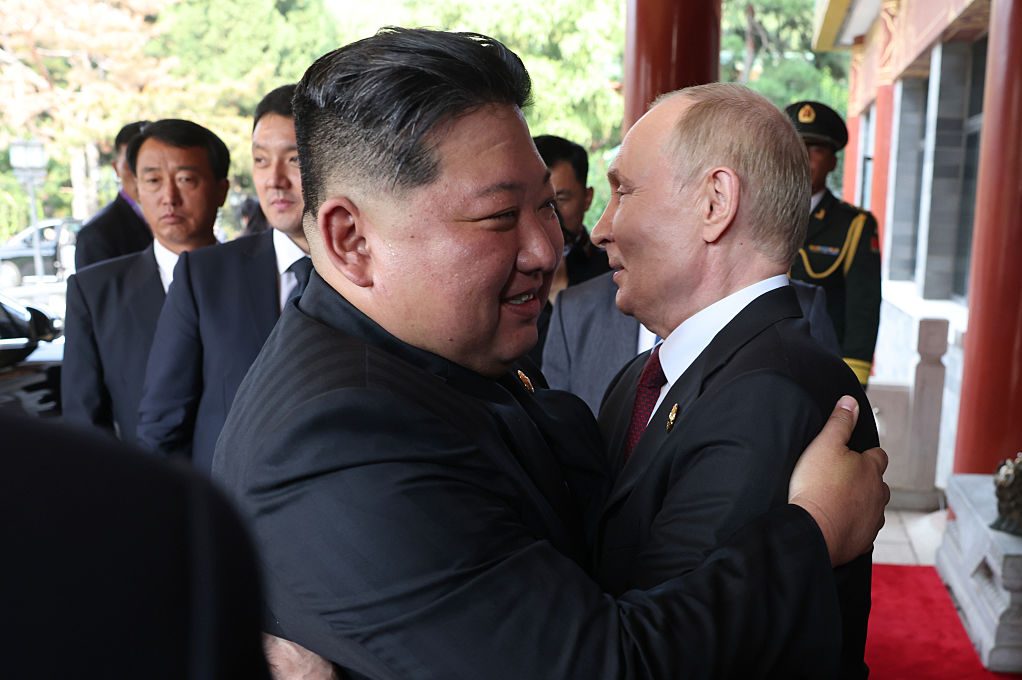
If bear hugs were army divisions and brave words cash euros, Volodymyr Zelensky would have ended his tour of European capitals this week the best-armed and best-funded leader in the world.
“We stand with Ukraine,” vowed British Prime Minister Sir Keir Starmer after hosting a summit for Zelensky and top European allies at Downing Street on Monday. “We support you in the conflict and support you in the negotiations to make sure that this is a just and lasting settlement.” Germany’s Chancellor Friedrich Merz declared that “nobody should doubt our support for Ukraine” and added that “the destiny of this country is the destiny of Europe.” France’s President Emmanuel Macron promised that Europe has “a lot of cards in our hands.” Zelensky went from London to Rome yesterday, where his staunch supporter Giorgia Meloni offered more hugs, while Pope Leo gave his blessing.
No doubt, Ukraine enjoys the sincere support of Europe in its struggle to resist Russia’s invasion. That’s not nothing. But in practice, what has Zelensky’s latest tour to drum up support actually achieved?
The Pope commands no divisions, as Stalin famously (but probably apocryphally) mused. Meloni recently postponed a government vote on further military funding for Ukraine while peace talks are ongoing. Macron last week refused to disclose details of €18 billion ($21 billion) of Russian Central Bank Assets held in France on the grounds of banking confidentiality. Merz has been a vocal supporter of a “reparations loan” to Kyiv backed by frozen Russian assets in Belgium – but has also insisted that a large chunk of that money be spent on expensive German armaments. Starmer’s plan for putting British boots on the ground in Ukraine as part of a post-war “reassurance force” are not remotely on anyone’s agenda. As for other European countries not present at the London meeting, Hungary has just done a deal to continue importing Russian gas via Turkey, in defiance of a long-delayed European ban; its foreign minister Peter Szijjarto is in Moscow for talks with his Russian counterpart. Japan, another supposed ally, has also refused to back Europe’s reparations loan.
Nonetheless some concrete progress has been made on Donald Trump’s much-redacted peace plan, now whittled down from its original 28 points. Europe and Ukraine are closer to a united position – of which the central point is that Zelensky insists that Ukraine cannot and will not surrender more ground to Putin.
According to Trump’s outgoing envoy for Ukraine, General Keith Kellogg, the two main issues standing on “the last ten meters” to a deal are on territory – primarily the future of the Donbas – and on who controls Ukraine’s Zaporizhzhia nuclear power plant, Europe’s largest and currently under Russian occupation. Kellogg is likely over-simplifying, as Putin’s shopping list of demands also include painful reductions in the size of Ukraine’s army, constitutional neutrality, de jure recognition of occupied land as part of Russia, and restrictions on the kind of non-NATO security guarantees offered to Kyiv by its western allies. But the Kremlin’s insistence on controlling the final 20 percent of Donetsk region that it has so far failed to conquer is emerging as a deal breaker.
The White House, eager to get a deal at apparently any cost, is reportedly pushing Zelensky and Europe to accept Putin’s demand for a Ukrainian withdrawal. But as Zelensky knows all too well, such a capitulation would provoke fury among the hard-line nationalists who currently control significant segments of Ukraine’s front-line forces. Even if Zelensky were to order a withdrawal it is entirely possible that these units would refuse to obey him. Radical nationalists, such as the Azov Brigade, have previously threatened Zelensky with death if he does a deal with Russia – most notoriously back in October 2019 when a referendum was planned on the future status of the rebel Donbas republics. Just as the Anglo-Irish Treaty of 1921 plunged Ireland into a civil war between pro- and anti-treaty forces, Zelensky faces the danger that giving too much to Putin would make Ukraine ungovernable.
Complying with Trump’s – and Putin’s – plan would also require either the mass evacuation of hundreds of thousands of Ukrainian citizens from the cities of Sloviansk, Kramatorsk and Konstantinovka or their abandonment to the well-documented horrors of Russian occupation. Surrendering the remainder of Donbas would also require the abandonment of the so-called “fortress belt” of trenches and tank traps that Ukraine has built in eastern Donetsk, leaving Kyiv with no natural defenses other than the Dnipro river. Indeed the Kremlin’s demand is so humiliating and so nearly impossible to implement that it’s likely that the reason Putin insists on it is to cover his refusal to make peace at all, while pretending to Trump that he is negotiating.
Zelensky has been betrayed in word by his one-time allies in Washington and betrayed in deed by his European friends, who despite their grandstanding are so far unable to provide him with the money and the weapons Ukraine needs. At the same time Zelensky finds his own credibility at home eroding under a brutal corruption scandal that has implicated some of his closest associates in a $100 million war profiteering scheme. Trump – who earlier this year described Zelensky as a “dictator” – this week called for new elections in Ukraine, further undermining Zelensky’s position.
Zelensky finds himself in an impossible dilemma. Complying with the US peace plan to abandon Donbas will lead to a political and military crisis in Kyiv. That leaves him with little choice but to defy both Trump and Putin. But even if Zelensky’s allies in Europe somehow come up with more cash to fund Kyiv’s ongoing war effort, there’s a catastrophic shortage of young Ukrainians willing to fight. As Senator John Kerry told a Senate Foreign Affairs Committee hearing on the Vietnam war in April 1971, “nobody wants to be the last man to die for a mistake.” Prosecutors have opened a staggering 235,000 criminal cases for desertion from the Ukrainian army since the beginning of the war – including 176,000 absent without leave since November 2024. That means that more soldiers are on the run from the Ukrainian army than currently serve in the armies of Britain, France and Germany combined. At the same time, Russian forces achieved a grim landmark in their relentless missile and drone war against Ukraine’s electrical grid infrastructure last week by entirely blacking out the provincial capital of Sumy for a whole day. Even Kyiv could soon face 16-hour rolling blackouts, authorities have warned.
In this dire strait, Zelensky needs all the friends he can get. Crucially, however, he needs not just their friendship but their practical help with money and arms. But supporting Ukraine is not enough. The most crucial front of the endgame of the war is the battle to convince Putin that the cost of continuing the war outweighs that of ending it. Slowly ramping up sanctions may be squeezing Russia’s war economy, but are still very far from crushing it. So in the absence of any realistic compellence strategy, all Europe has to offer Zelensky is kind words and bear hugs.









Leave a Reply