

 Facebook
 X
X LinkdIn
 Copy Link
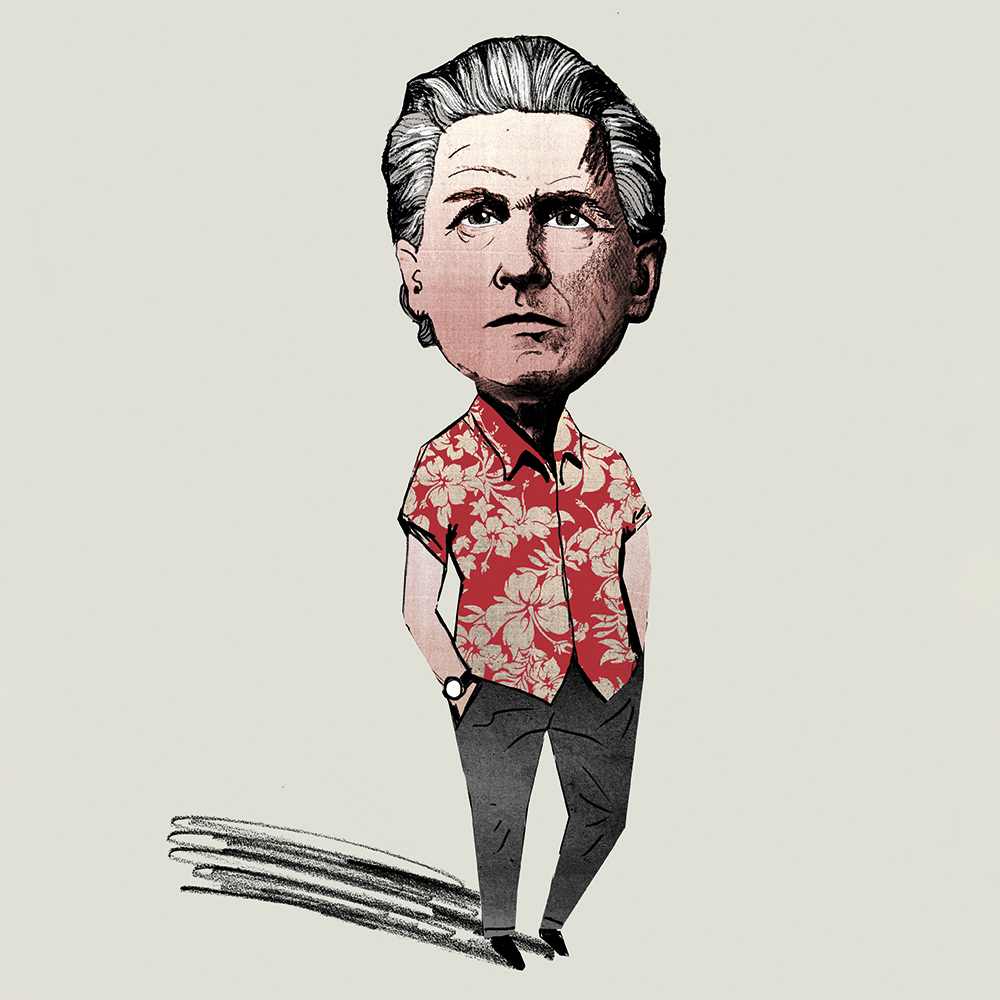
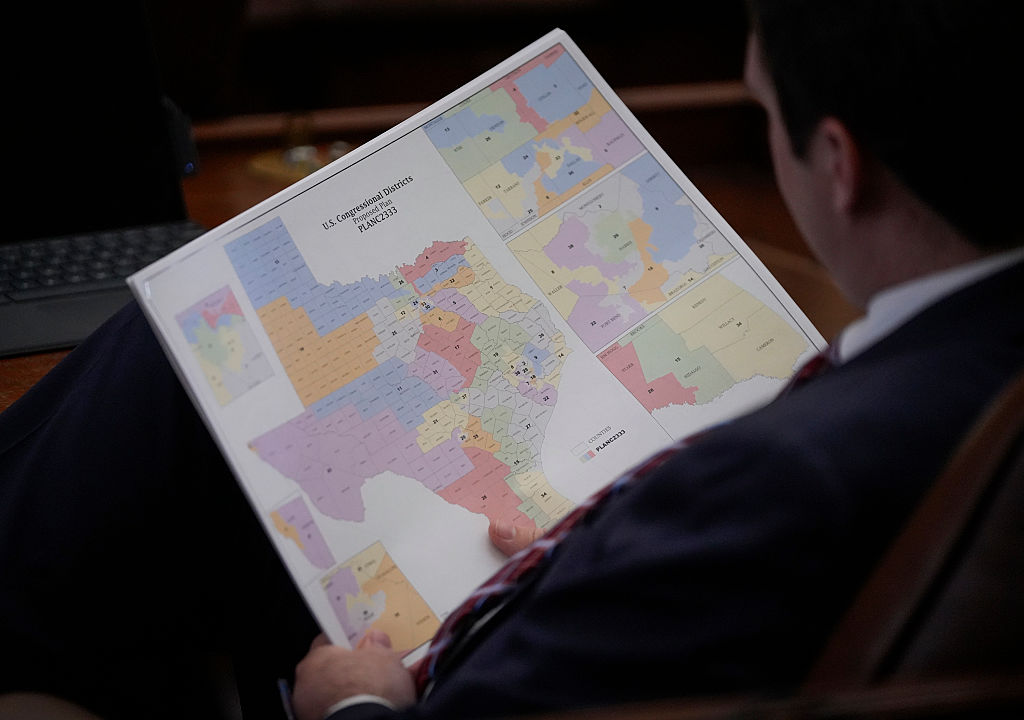
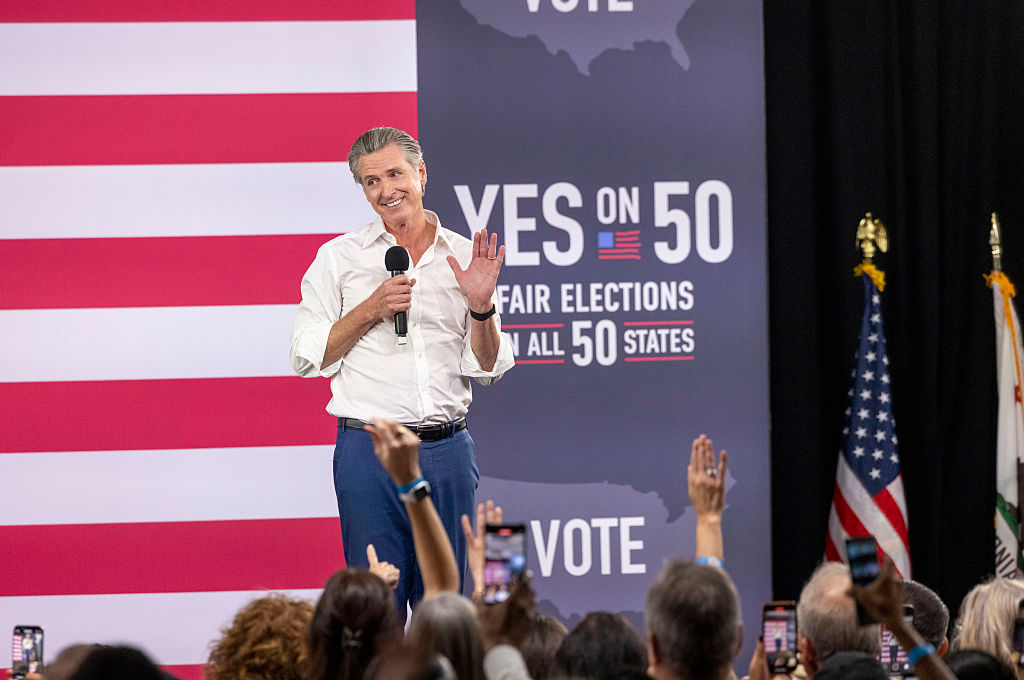
More through historical accident than anything else, Gavin Newsom has emerged as the de facto leader of the Democratic resistance. His dubious attempt to redistrict California along partisan lines won at the ballot box last month. It was a gamble – an open and explicit attempt at gerrymandering – which voters have rewarded. He is conspicuously modeling his image on Bill Clinton’s and Slick Willie is returning the compliment by letting insiders know that he is hugely impressed by Newsom’s talents.
Newsom is also audaciously recasting himself as a working-class hero. He has said he spent his childhood “hustling” and that he “raised himself.” That rather downplays his rise as a protégé of the Getty family, which employed his father as its lawyer. In 1991, a young Newsom was photographed with the Getty children as part of a newspaper story titled “The Children of the Rich.” It’s unlikely that the San Francisco elite, who have financed his ruse, are fooled; nor is anyone else for that matter. Yet the act goes on, without a hint of shame.
In November, his former chief of staff was indicted for wire fraud and falsifying tax returns, using fake contracts to deduct the cost of luxury handbags and private jet travel. Dana Williamson’s defense team say federal investigators had sought her cooperation with an as-yet undisclosed investigation into Newsom himself. His team denies any knowledge of such an investigation – an increasingly common occurrence in the one-party state.
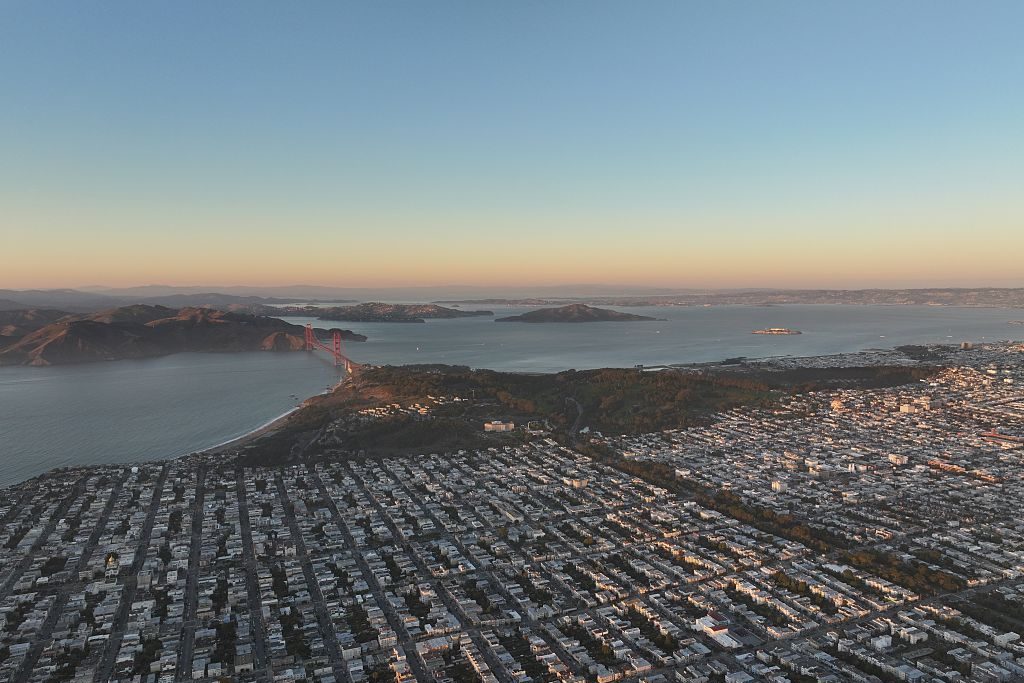
Whatever the truth of the Williamson case, Newsom’s record as Governor alone ought to be fatal. California has led the globe in culture and technology for more than a century. If the state were a country, it would be the fourth-largest economy in the world, as Newsom endlessly brags. But look under the hood and California has become a disaster for most workers.
This economic regime is, as former director of the California labor department Michael Bernick puts it, an “upstairs, downstairs” autocracy. Newsom’s state has a phenomenally wealthy class above a large, low-wage underbelly. Of course he rarely discusses the other California; the state has the highest proportion of those living in poverty, tepid job growth and the country’s highest rates of unemployment.
Among teenagers the unemployment rate tops 21 percent, just short of twice the national average. For Gen Z, unemployment ranks second, just ahead of Mississippi. California is the single worst state at creating jobs that pay above average; it hemorrhaged 1.6 million above-average-paying jobs in the past decade, more than twice as many as any other state. In the past year, the only new jobs created in California were in government-financed healthcare and government itself.
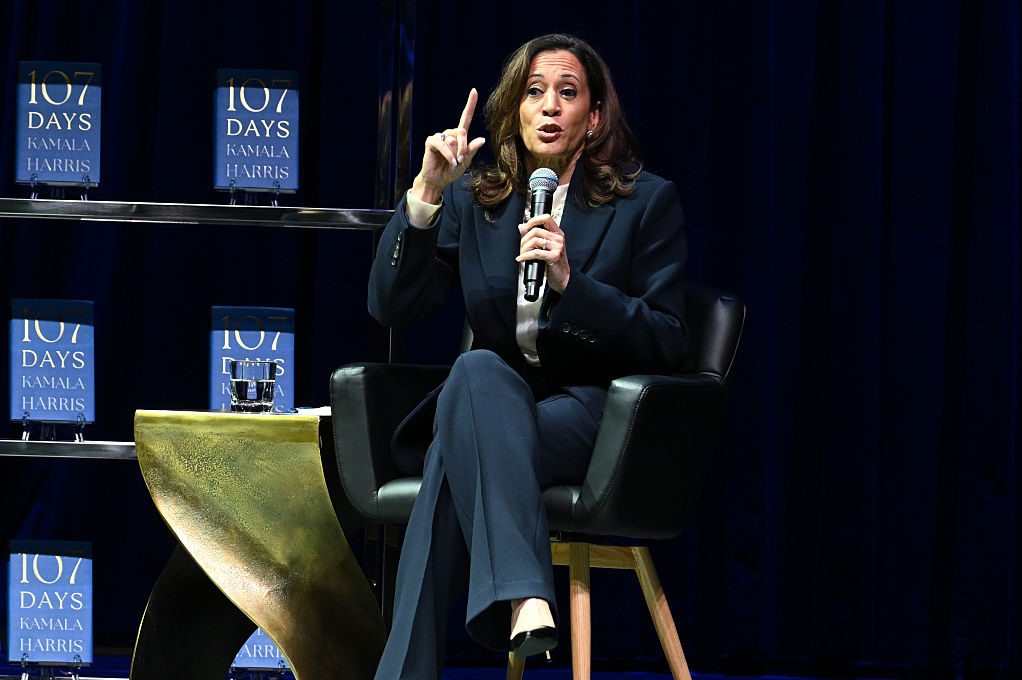
Yet the Governor likes to bask in California’s glow. He inherited an economy that is home to five of the top ten companies in the world. No other region on the planet comes close. The presence of these firms, and their capital gains, along with a highly inflated property market, do much to propel the state’s GDP. That’s partly why he now dominates the race to be the presidential candidate for 2028, as his long-time rival Kamala Harris fades towards well-deserved obscurity.
The notion of an enlightened California coming to rescue the nation from Trump also plays well with large sections of Silicon Valley. Despite the tech world’s flirtation with MAGA, loyalties remain decisively on the side of the Democrats. The Republicans haven’t won a statewide race in almost two decades. Partly that’s down to demographics. Young workers are fleeing. Left behind is a rapidly aging population, many rich from real-estate investments, a large coterie of affluent professionals, state-dependent individuals and, most importantly, public-sector workers, whose unions funded Newsom’s successful redistricting drive. Leading Democratic pollster Paul Mitchell told me that, thanks to these demographic changes, the GOP’s chances of recapturing the Governor’s Mansion would be “a one in every 200 years event.”
Newsom’s agenda is shaped largely by public-employee unions and tech-financed green lobbies. But these same policies have devastated the state’s blue-collar economy. Once a major oil producer, the state now suffers the nation’s highest energy prices and is utterly dependent on foreign imports from South America and Saudi Arabia. California’s regulations have added to the erosion of industrial jobs. Since 1990, one-third of manufacturing jobs – 1.3 million positions – have disappeared. Newsom likes to present himself as a member of the hustling classes and yet, in truth, he has destroyed them, encouraged by the established wealth of unions and tech oligarchs. It’s a story that makes much more sense when you learn of his early years.
Over the past two decades, four million net domestic migrants have left California – that’s the population of San Francisco, Anaheim and San Diego combined. In the past decade, the four leading destinations for young people were all in the South – Nashville, Austin, San Antonio and Dallas-Fort Worth. Austin’s growth in educated-millennial migration was almost three times that of New York and twice that of San Francisco. This has only accelerated under Newsom.
Some suggest that California’s tech sector will make up for this decline in jobs. But companies, too, are leaving. Along with energy firms such as Chevron and Occidental, the recent exodus includes Tesla, SpaceX, McKesson, Jacobs Engineering and Oracle. The big winner is California’s arch-rival, Texas. Hollywood is also suffering a major loss of jobs to other states and countries. Tech employment is heading downward, with more than half of all national tech job losses occurring in the Golden State. Texas, Mississippi, Tennessee and South Carolina are projected to enjoy the biggest growth in tech over the next decade.
Optimists point to artificial intelligence as a new source of growth, but California’s high energy prices make that unlikely. The soaring need for affordable electricity is leading firms such as Nvidia and Samsung to locate centers which fabricate advanced chips and processors in areas with lower prices for electricity. This includes Texas, where a new quantum-computing center is being planned, and energy-rich states such as Pennsylvania, which is seeking AI growth as a way to reanimate its industrial sector.
To be sure, many AI firms began life in San Francisco. But they are unlikely to create more tech jobs. City economist Ted Egan suggests that layoffs from other companies, largely due to AI replacing workers, have wiped out gains from the new tech. AI will, if anything, accelerate the rewards to the investor class, a handful of entrepreneurs and well-compensated “genius” programmers. What seems to be happening is that a few highly paid executives and developers stay on their campuses, while computing power shifts to places where energy is cheaper. California is becoming the oligarch’s state, led by the oligarch-in-chief.
Nothing drives the mass departure from America’s most blessed state more than affordability. This of one of issues that excites both the “abundance” advocates and the increasingly socialist-oriented YIMBY movement. Newsom, who bought a new $9 million house last year, claims to be taking bold steps to improve the state’s housing market. But he has overseen laughably poor results. Many Californians will never own a home or find an affordable rental. Despite hundreds of “pro-housing” initiatives, the state’s housing crisis is getting worse. California consistently lags in the construction not just of single-family homes but multifamily homes as well, while the state dominates the list of the nation’s most expensive ZIP codes.
Home prices in coastal California are nearly 400 percent above the national average, and statewide the median cost of a home is 2.5 times higher than in the rest of the country. Not surprisingly, California has the second-lowest home-ownership rate in the nation, 56 percent (New York’s is lowest, at 54 percent). Nor have Newsom’s policies helped renters. The average cost of a two-bedroom apartment in Los Angeles is just shy of $3,000 a month, according to apartments.com, about $1,000 more than the national average.
Housing is just one of the many Newsom policies that may not play so well in the vast center of America, where single-family homes are the norm and prices are far lower. Certainly, his long-standing assault on fossil fuels will win over few workers in Texas, Oklahoma, Louisiana, the Dakotas and Pennsylvania, the epicenters of the US’s enormous energy production. Laid-off factory hands in Michigan may not welcome an agenda that includes the wiping out of profitable gasoline-fueled cars. Progressive mantras that play well in California may prove Newsom’s undoing in a 2028 presidential run.
But it would be foolish to underestimate Newsom. Burdened by dyslexia, he has compensated with extreme discipline and hard work. Never an object of adulation, like his predecessor Ronald Reagan, or of respect like the more cerebral former California governor Jerry Brown, his career trajectory has evolved carefully, along very pragmatic lines, even while Newsom embraces progressive bromides. “He is trying to be the anti-Trump,” notes long-time Democratic consultant Dave Gershwin, “but if he needs to cut ties with the left, he’ll do it.” There is little sign of that yet in his cultural stances, such as his preference for transgender over parental rights or his embrace of climate-change religion, which still resonate with his state’s progressive-dominated media.
An ability to shift from ideology to practicality has been a hallmark of Newsom’s career. Expect a move right on these questions in the coming months. As mayor of San Francisco, he often sided with business interests against the local radical left. As lieutenant governor under Brown, he resorted to visiting Texas in search of a more viable economic model. Just this year he displayed his skill at shifting with the winds by trying to reach out to conservatives such as the late Charlie Kirk when it seemed MAGA was on the rise.
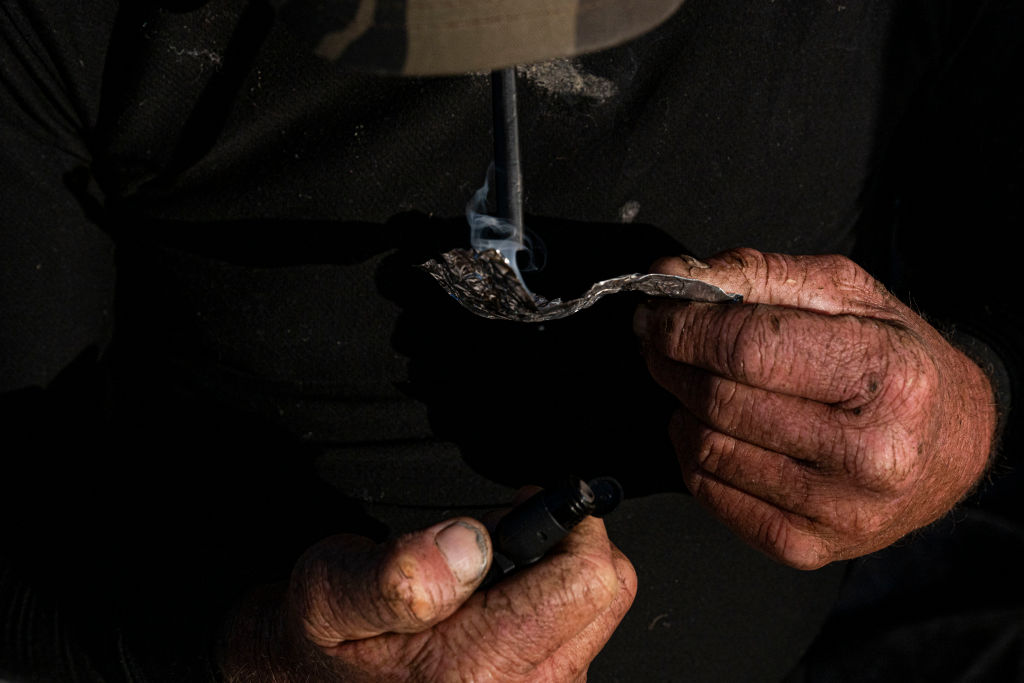
When necessary, Newsom is willing to jettison progressive demands. He vetoed a bill that would have legalized “shooting alleys” – so-called safe drug-injection sites. He worked to keep the state’s last nuclear and natural-gas plants in operation to prevent politically unpalatable blackouts. To do otherwise would have been madness: these plants account for half of California’s electricity. Newsom is many things, but mad is not one of them. Facing a dismal fiscal reality, he has been forced to fend off proposals from Sacramento progressives that included a 32-hour work week, raising the state’s income tax – already the nation’s highest – and adding new payroll taxes for universal healthcare.
To balance practicality with ideology, Newsom uses his media skills – ultra-friendly Politico claims he has “won the internet” – to assert himself. The donor class, which has always liked him, now sees him as the best option at a time when a majority of under-40s embrace socialism. Particularly threatening to Palo Alto is a survey that found that a majority of under-40s now favor restricting incomes, with a large portion seeking limits of less than $1 million annually.
GOP opponents say that Newsom is the “tier one” to fear in 2028. “He’s really smart,” according to California’s Republican national committeeman Shawn Steel, “besides having great hair.” Even the American Conservative proclaimed him “the big winner” of the 2025 elections, thanks to his gerrymandering initiative.
Of course, Newsom’s record of failure for working people could provide fodder for a challenger from the left, and in November 2028 from the GOP. But right now, anti-Trumpism overwhelms serious progressive critiques of Newsom’s record. He is no great statesman. But, with his media savvy and good looks, he could well play one on TV, and that may be more than enough against either his party’s socialists or the remnants of a disintegrating MAGA.
This article was originally published in The Spectator’s December 8, 2025 World edition.







Leave a Reply