



 Facebook
 X
X LinkdIn
 Copy Link

“Those whom God hath joined together, let no man put asunder.” With this stern admonition, the Church has long been a fervent defender of marriage. But as religion has faded as a social force, so too has marriage.
Does it much matter if people choose to shack up together instead of tying the knot? What is lost if some men want to be incels or some women decide a husband is a bothersome surplus to their needs? The problem is that all lifestyles alternative to marriage serve to undermine it. And like other major social institutions, marriage is not some arbitrary cultural construct like a federal holiday. Rather, it rests on genetically shaped behaviors that evolution has written into the human genome because of their survival value. Suppress or subvert these behaviors and you risk consequences.
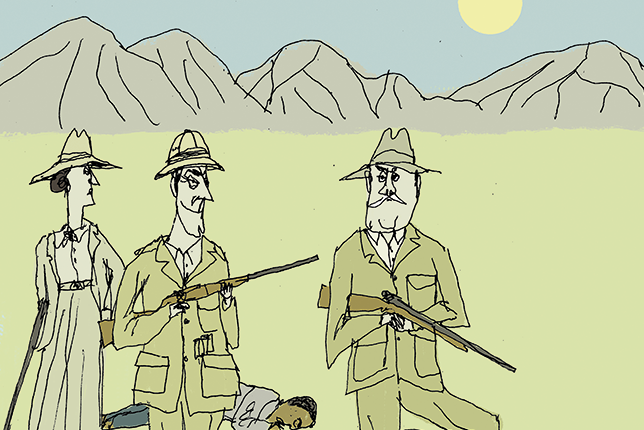
Evolution’s imperatives are deeply laid. Step back just a few beats in evolutionary time, to when early humans were exploring the African savannahs, using their wits to evade stronger predators. The human skull needed to expand, but the mother’s pelvis was a limitation. To pass through it, babies had to be born with their heads still small, which meant prematurely. These helpless infants were more likely to survive if two parents were around, unlike with the other great apes where the mother alone raises the offspring. Evolution supported the human family unit with two clever biological innovations, also unknown among other apes. Female chimpanzees sport visible swellings when they are ready to conceive but ovulation in humans became largely concealed, so a man wanting to ensure his paternity had to stick around until the first signs of pregnancy. And to encourage further association, evolution arranged for women to be sexually receptive all the time, not just at estrus.
The pair bond between man and woman induces both partners to share in the arduous task of raising children. It’s this set of genetically shaped behaviors that is formalized in the cultural institution of marriage. The nature of the pair bond was somewhat modified with the advent of polygamy in tribal and successor societies, where powerful men were able to accrue many wives. Genghis Khan, the world champion in this pursuit, labored prodigiously in the large harems he assembled throughout the lands he conquered – and some 16 million men today carry his Y chromosome. But polygamy is destabilizing. For some men to have many wives means that many men have none. Large numbers of wifeless young men, with no stake in society, create problems. The usual solution was to march them off to war with neighboring states. But warfare doesn’t always turn out as expected.
Monogamy first came to prominence in ancient Greece and Rome, and was spread by the Church throughout the Roman empire. So successful was the one man/one woman principle to the formation of stable polities that it eventually became the custom across most of the world. Marriage and monogamy are both stabilizing measures developed by culture in support of the behaviors prescribed by evolution. The human family is the best social structure that evolution could contrive for raising children. What happens when we mess with this structure and the institution of marriage that supports it?
The answer, not to be overdramatic, is extinction – or at least a road that leads directly there. In almost all countries outside of Africa, fertility is in rapid decline. The total fertility rate in both the US and UK has dropped more than 20 percent since 2010 and last year reached all-time lows of 1.60 children per woman’s lifetime (US) and 1.41 for British women. For a population to sustain itself at constant size, a fertility rate of 2.1 is required.
Bad things happen to declining populations. A dwindling workforce has to support an ever-heavier burden of retirees. Tax rates rise, hope for the future falls. Defense is imperiled if the army cannot meet its recruitment goals. Once a population slips below a fertility rate of about 1.4 for 20 years or so, it reaches a point of no return: retirees consume the resources young families would need to raise more children. Marriage is the context in which people have children. Some 80 percent of children born in the US and UK are born to married parents. People who cohabit have far fewer children. Children fare best when both a mother and father share in their upbringing. The declining rate of marriage is one of a nexus of factors that have depressed fertility. People are starting families later, or stopping at one child. One reason is the expense of raising children. Another is that women are now better educated than men and can easily find jobs, often choosing careers over childcare.
In World War One, women handed out white feathers on the street to men presumed too cowardly to risk their lives on the front line. Should men now be distributing white feathers to women who decline to bear children, a social duty just as crucial for society’s survival as is military service? Well, no. Women cannot ethically be dragooned into bearing more children than they want. But the obvious incentives just don’t seem to work. South Korea has put in place every pro-natalist policy you can think of, from direct cash payments to housing subsidies and government-funded matchmaking. Its fertility rate hit 0.72 in 2023 and is projected to fall as low as 0.65 this year. Last year, 150 schools in South Korea reported that they had no new first-year children. Unless childbearing is somehow made a more welcome choice for women, and marriage comes back into popularity, each future generation will be smaller than its predecessor.
This article was originally published in The Spectator’s December 8, 2025 World edition.
















Leave a Reply