



 Facebook
 X
X LinkdIn
 Copy Link

In 2017, Zoom finally achieved what Skype never could: hosting video calls that didn’t freeze. It was a golden moment to take education online. Enter Lambda School, a Silicon Valley startup founded by Austen Allred with the aim of disrupting higher education.
Allred’s idea was simple: people wanted to learn to code but often couldn’t pay $20,000 upfront. His solution? You’d pay nothing until you landed a job earning more than $50,000 a year. At that point, a share of your income would go back to Lambda. But never more than $30,000, and never with interest. The technical term for this is an income share agreement, or ISA, an equity-like stake in a few years of a person’s future income. If you got a good job, the school was repaid. If you didn’t, the school took the loss. The incentives were perfectly aligned.
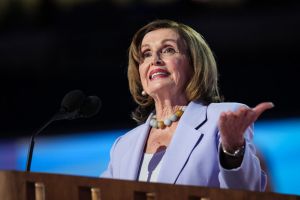
The idea should have been a rare bipartisan win. Republicans distrust academia and like the idea of having “skin in the game.” Democrats want to protect students from debt. Everyone agrees the current student loan system is broken. Betsy DeVos, then Donald Trump’s education secretary, was enthusiastic. She suggested that income-share agreements could replace the student loan system entirely. In a rational world, that would have been a blessing. In 2017 Washington, it was a curse. DeVos endorsed the model; the resistance inevitably went to work. Elizabeth Warren, Nancy Pelosi and their allies began churning out what Allred calls “a white paper a week” denouncing income-share agreements as predatory. It didn’t matter that the contracts expired after five years if the graduate never earned enough. The narrative was set: income shares were “student debt by another name.”
Once Democrats set a target, the media follows like hunting hounds. Article after article appeared – some identifying genuine complaints about Lambda School, such as underqualified instructors and inflated claims about post-employment prospects. But none of Lambda’s critics could explain how its core business model – the ISA – was worse than the traditional model of interest-fueled student debt, interest that accumulates regardless of whether graduates obtain employment. In fact, Lambda was losing money. Leaked internal documents revealed the company was spending around $13,000 per student but receiving, on average, around $5,750 back. But investors were happy to support the company as it expanded, in the hope that this model would one day prove profitable while benefiting students.
The Consumer Financial Protection Bureau (CFBP) joined the critics, determined to prove that if something looked like a loan, it must be one. It launched investigations into every company using ISAs, “bankrupting everyone but us,” as Allred later put it. Lambda asked for clarity. Tell us how to comply, it said. We don’t care how you regulate the ISA, just regulate it. The Bureau refused. Instead, it came up with a theory: because Lambda offered two options – those who could pay were charged $20,000 upfront; those who couldn’t were offered the $30,000 income share – so the $10,000 difference must be “interest.” It made no sense. That difference is far closer to a “finance charge” – you promise to pay a flat fee for deferring repayment. The mark-up compensated Lambda for taking on the risk in case students couldn’t repay the tutoring charges. Income shares don’t tick up each month by a certain percentage of the principal, so clearly this wasn’t interest. But reason rarely survives contact with regulation.
The first formal inquiry came in 2020. Then silence. Finally, last year, the CFPB returned, demanding a settlement. The statute of limitations had run out, but that didn’t matter. It wouldn’t say what laws Lambda had broken, only that it needed to admit wrongdoing. When Lambda refused, the CFPB named Allred personally. If the company went bankrupt, they could pursue him directly. “They basically said: we can bankrupt your company, or we can bankrupt your family,” he recalls. To end the standoff, Lambda agreed to a token fine and to “admit” to several false statements, including that instructors had volunteered their time. The Bureau also forced the company to forgive income-share agreements that were already about to expire. “A refund of nothing,” Allred says.
Lambda was also banned from student lending unless a regulated third party was involved, effectively killing its business. To stay alive, the company switched to conventional loans. The loans carried interest of 15 percent and were far worse for students than ISAs – but unlike ISAs, standard loans didn’t have a political target on their back. A business set up to save students from predatory interest rates was forced to implement interest rates.
The company had sold or borrowed against some of its outstanding student loans to recoup its losses. Investors then got the right to collect a slice of a student’s future income instead, while Lambda turned uncertain repayment contracts into cash that could be reinvested. The CFPB decided that, too, was improper. “They said the incentives weren’t aligned,” says Allred, “which makes no sense… the income shares have to be worth something to borrow against them.”
By then, the company was bleeding. Every month the investigation dragged on, Lambda stopped enrolling students and cut staff. A model that once promised to democratize education – risk-free for students, performance-based for schools – was strangled by the very agency meant to protect consumers. The irony is that the Bureau was required to create a regulatory framework for income share agreements, something Allred had asked for back in 2017. Eight years later, it still hasn’t done so.
Allred says he began the project with a naive faith in government. “I wasn’t right-wing at the time,” he says. “I thought the people I was dealing with had good intentions and wanted to do the right thing. It took me way too long to realize that wasn’t the case. It was my team versus yours.”
Lambda set out to solve a problem Washington claims to care about: how to educate people without burying them in debt. It made great strides towards doing so, until the federal bureaucracy decided that aligning incentives was, somehow, the real crime.
This article was originally published in The Spectator’s December 8, 2025 World edition.











Leave a Reply