



 Facebook
 X
X LinkdIn
 Copy Link
Mayor-elect Zohran Mamdani has debuted the transition team intended to prepare New York City Hall for its 111th mayor. The team is filled with the types of leftie loonies expected from Mamdani: a trans, anti-zionist rabbi from Brooklyn as well as a gun-control advocate dubiously associated with Nation of Islam-founder Louis Farrakhan. And then there’s Alex Vitale – a Professor of Sociology at Brooklyn College whose views on policing are not only disproven, they’re downright dangerous.
Vitale is one of a handful of Transition Team members tasked with overseeing community safety issues. Public safety, policing and crime reduction have become flashpoints for the new Mayor, who established his political career promising to end law enforcement as we know it. Time after time, Mamdani has committed to “abolishing the police” – a phrase that gained nationwide traction following the death of Eric Garner and the #blacklivesmatter-led race-reckoning back in 2020.
In June, Mamdani walked back much of his “defund” rhetoric following a mass office shooting in Midtown Manhattan. “I am not defunding the police; I am not running to defund the police,” Mamdani told reporters at the time. “I’ve been very clear about my view of public safety and the critical role that the police have in creating that public safety.”
Enter Prof. Vitale.
If there is any doubt Mayor-elect Mamdani remains committed to defunding the police it’s his choice of Vitale for his transition team’s 26-member Committee on Community Safety. Vitale literally wrote the book on the topic, “The End of Policing” back in 2017. “The bestselling bible of the movement to defund the police, in an updated edition,” is how Vitale’s publisher describes the book on its homepage. “The problem is policing itself,” writes Vitale in the book itself.
Mamdani-watchers had been hopeful that his previous anti-law enforcement policies would be blunted by his decision to retain high-profile, tough-on-crime Police Commissioner Jessia Tisch. But the selection of Vitale this week suggests that New York may be picking up, where “defund” disasters in other big cities left off. And the New Yorkers Mamdani campaigned as most championing – the poor, and black and brown – will be hit hardest if the Mamdani-administration embraces the anti-law and order policies he’s espoused for years.
Look no further than Minneapolis, where Garner was killed by police in June 2020, to witness the failure of defund-the-police firsthand. Even before Garner’s death, progressive city activists had been working hard to reduce law enforcement. As The New York Times reported, activists confronted Minneapolis Mayor Jacob Frey at his home during the height of the post-Garner riots and demanded “We don’t want people with guns toting around in our community.”
But people “toting guns” is what Minneapolis got as city officials became mired in appeasing the local activist class. Shooting victims surged by 90 percent in the year following Floyd’s death, as arrests dropped by a third. The following year, shootings rose by 101 percent – with some 83 percent of the victims (and 89 percent of the shooters) African-American, according to City of Minneapolis data.
Similar stats were tallied in other “pro-defund” cities including Chicago, Philadelphia, San Francisco and Portland, according to a 2002 report by the Heritage Foundation.
This vision of the future has already arrived in New York City – and Mamdani has yet to take office. Like in Minneapolis, the vast majority of violent crime in New York is committed by ethnic minorities against ethnic minorities in just a handful of crime-ridden neighborhoods. In 2022, for instance, black New Yorkers constituted 74 percent of all NYC shooting victims, despite comprising just 24 percent of the city’s population. By 2023, black New Yorkers were 18 times more likely to die from gun violence than their white counterparts, according to data from the Johns Hopkins Bloomberg School of Public Health.
Although violent crime rates have declined to record levels under current Mayor Eric Adams and Commissioner Tisch, minority communities remain outliers. Last year blacks and Hispanics comprised nearly 90 percent of shooting victims citywide, with virtually all of the shooters black and Hispanic. Meanwhile, the NYPD — which is nearly 65 percent non-white — has lost over 15,000 police officers over the past five years, and hundreds more continue to depart monthly.
What’s most telling about the “defund” debate has been the number of minority community leaders vocally opposed to it. As early as August 2020 – just two months after BLM protests clogged city streets – high-profile black and Latino officials were blasting plans to cut $1 billion in NYPD funding. Same in Minneapolis and Philadelphia and most big cities decimated by gun violence. Most crucially, the majority of big city residents never wanted their police departments defunded, either. In fact, one year after Garner’s death, the percentage of Americans seeking an increase in police funding actually rose by 16 percent.
With the Mamdani inauguration still more than a month away, it’s too soon to gauge whether he will fulfill his long-held belief in trading seasoned police officers for a new-fangled “Department of Community Safety” filled with social workers to tackle many public safety issues. But either way, the appointment of Vitale to his transition team suggests Mamdani has yet to fully step-back from his long-held anti-policing views. Should he not, violent crime and gun deaths will be the inevitable consequences – with white New Yorkers like Prof. Vitale mostly insulated from the carnage.
Mamdani hires author of defund the police bible
Alex Vitale wrote ‘the problem is policing itself’
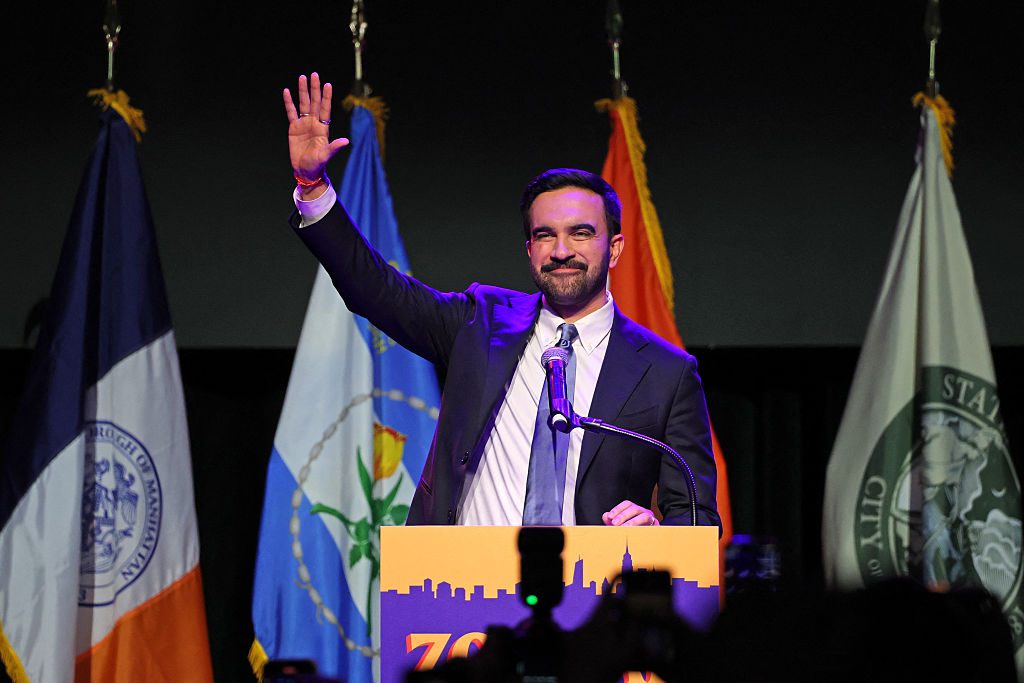
Zohran Mamdani celebrates during an election night event (Getty)
Mayor-elect Zohran Mamdani has debuted the transition team intended to prepare New York City Hall for its 111th mayor. The team is filled with the types of leftie loonies expected from Mamdani: a trans, anti-zionist rabbi from Brooklyn as well as a gun-control advocate dubiously associated with Nation of Islam-founder Louis Farrakhan. And then there’s Alex Vitale – a Professor of Sociology at Brooklyn College whose views on policing are not only disproven, they’re downright dangerous.Vitale is one of a handful of Transition Team members tasked with overseeing community safety issues. Public safety, policing and…
Share
Mamdani hires author of defund the police bible
https://thespectator.com/topic/mamdani-hires-author-of-defund-the-police-bible/

Facebook

Twitter

Print

LinkedIn

Messenger

Email
Text
Text Size
Small
Medium
Large
Line Spacing
Small
Normal
Large

Next reads





Leave a Reply