



 Facebook
 X
X LinkdIn
 Copy Link
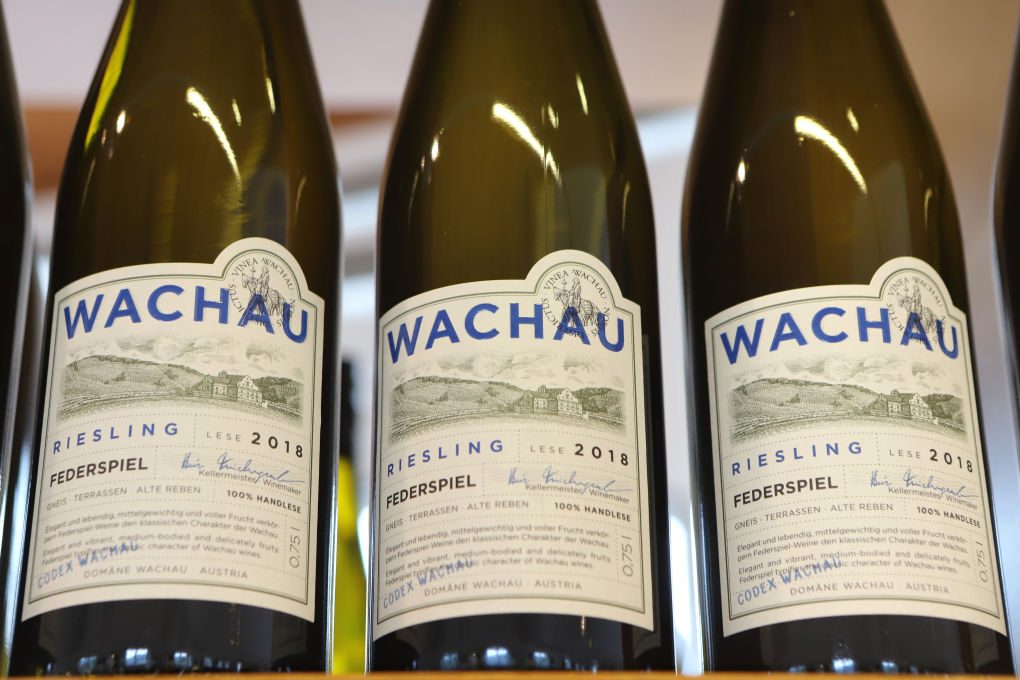
I was recently invited by friends to a small birthday fête at Four Twenty Five, Jean-Georges Vongerichten’s latest New York restaurant at (wouldn’t you know it) 425 Park Avenue. It was, as Bertie Wooster might have put it, oojah-cum-spiff, a worthy companion to the Terrace and Nougatine, those other famed New York refectories by Jean-Georges.
I won’t bore you with the victuals, which were so far from boring themselves that it would take more than a column just to enumerate those toothsome morsels. Instead, let me mention a couple of the wines we enjoyed, noting for posterity that the wine list at Four Twenty Five is one of the most extensive and thoughtfully selected in New York City. I hope to have occasion to make a thorough study in the years to come.
We started with a 2023 Alzinger Grüner Veltliner “Federspiel” from the Ried Mühlpoint vineyard, one of Alzinger’s best spots. It is a dry, light-bodied wine of about 11.5-12 percent alcohol. The year afforded a bright, sunny growing season and this is a bright and sunny wine, sophisticated but not fussy. Incidentally, the term “Federspiel” comes from falconry and refers to the bait used to lure the bird homeward. The vineyard lies on the clay and gneiss-bedded slope of the Steinertal in Wachau, Austria.

Readers with long memories will know that the Austrian wine industry almost disappeared in the decade following the 1985 diethylene glycol scandal. Attentive quality control analysts discovered that several Austrian wineries were lacing their potations with what amounted to anti-freeze, which made the wines taste sweeter and rounder. The juice found its way to the German market and some was illegally blended with German wine. The discovery of the adulteration cratered the Austrian wine industry for a decade, but now it is back in a big way.
Indeed, grüner veltliner, the most widely planted grape in Austria, has for some years been one of the trendier whites, and for good reason. It is notably food-friendly, complex, subtly aromatic but clean, its distinctive spiciness coming from rotundone, the peppery tasting chemical compound that is also present in syrah. I have no idea how much Jean-Georges is charging for a bottle of this grüner from the Alzinger winery since I was in the happy position of being a guest on this occasion. Out in the wild, two Andrew Jacksons ought to snag you one.
For our main course we moved on to a wine from the Arbois appellation in Jura, the wine growing region between Burgundy and Switzerland. “Very distinctive and unusual wines”: that’s how every description of wine from the Jura begins, and rightly so. The most famous are vins jaune, fermented, as is sherry, under a flor of yeast.
We had a 2020 Savagnin “Amphore” from Bénédicte and Stéphane Tissot (about $100 retail). The Tissots age this wine for five months in clay amphora, a process similar to that used in the production of Georgian wine, and then in large wooden casks called demi-muid. The result is a bright orange, cloudy wine that is reticulated with hints of stone fruit, black tea and cider. It is, as one commentator noted, “powerful stuff,” and not just because of its high acidity and 14.5 percent alcohol. Distinctive. Delicious. Delightful. I did not know at the time, but it turns out that DNA analysis recently revealed that grüner veltliner is a natural crossing of the savagnin grape and an obscure Austrian variety from the Burgenland region of eastern Austria, so our evening’s wine consumption had hidden interconnections.
Grüner veltliner. Savagnin. Here’s another grape you will be hearing more about: clairette blanc. It’s prominent in many Provençal whites (you’ll also find it in wines from the Rhône and Languedoc). We’ve had occasion to sample the rosé from Domaine du Bagnol before. The white from this storied vineyard from around the ancient fishing village of Cassis is a blend of clairette blanc, ugni blanc (also called trebbiano), and roussanne. It sells for about $30. Like its Cassis neighbor Clos Sainte Magdeleine, another winner, it is a subtle, quietly aromatic wine that grows and blossoms on the palate. Cassis has been home to the vine since Greek sailors from Phocaea arrived in the 6th century BC. The wine writer and importer Kermit Lynch calls it “an earthly paradise.” When you book a trip, let me know if you require an unpaid travel companion.
This article was originally published in The Spectator’s December 8, 2025 World edition.
















Leave a Reply